


FreeCell Solitaire
Solitaire Card Games Inc
I approached FreeCell Solitaire as the kind of card game I could open when I wanted a quiet break rather than a demanding gaming session. It is a free solitaire game from Solitaire Card Games Inc., aimed at players who enjoy planning moves, clearing a layout, and gradually improving their decisions. The familiar FreeCell rules make it easy to understand, but the open-card structure gives each deal more thought than a purely luck-driven patience game.
My first impression was that this is best treated as a focused, low-pressure puzzle. You are not managing a large world, learning a complicated control scheme, or waiting for other players. You simply study the cards, decide what can move, and try to finish the layout without blocking yourself. That simplicity is the main attraction, although it also means the game will feel limited if you expect constant novelty or a deep progression system.
How the FreeCell format feels in everyday play
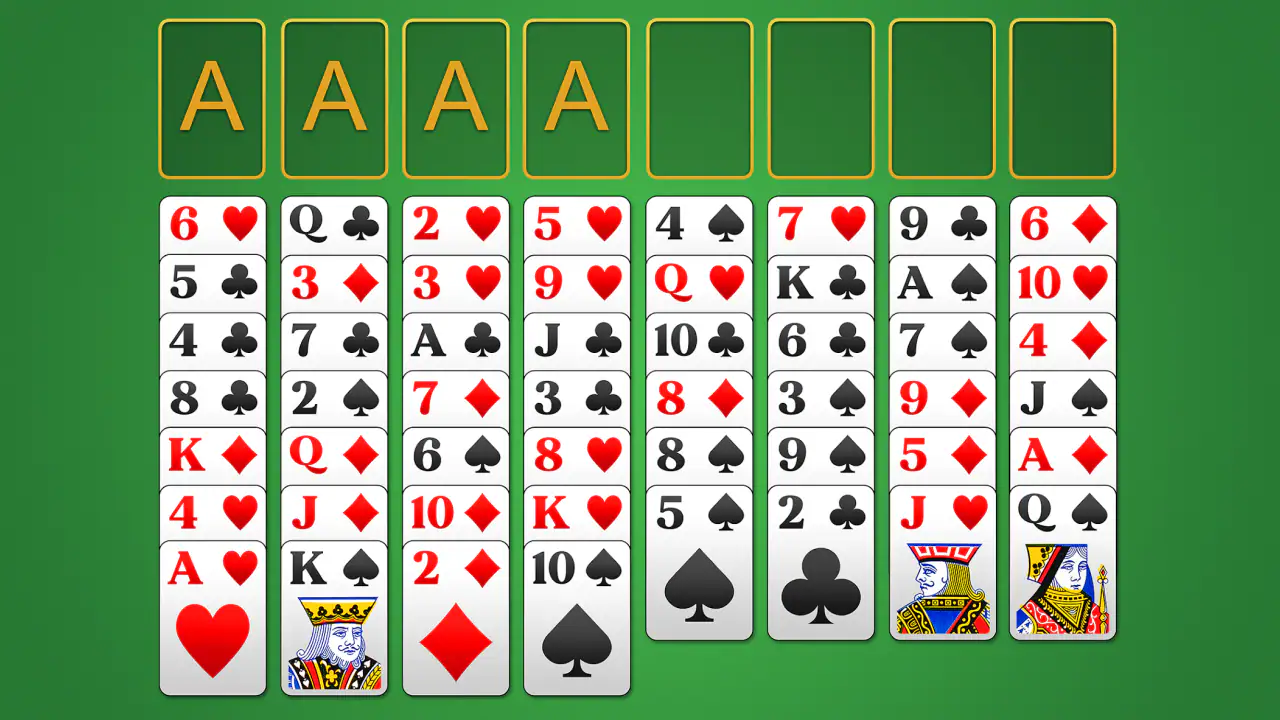
FreeCell differs from many familiar solitaire variants because most cards are visible from the start. That changes the experience completely. Instead of turning over hidden cards and hoping the next reveal helps, I can usually see the consequences of a move before committing to it. The challenge comes from arranging temporary sequences, using the free spaces intelligently, and protecting the cards needed to build the foundations.
That makes each hand feel more like a compact logic problem than a simple way to pass time. I often find myself looking several moves ahead, especially before moving a long stack. A move that appears useful can occupy a valuable empty space or expose a card in the wrong order. The game rewards restraint: sometimes the strongest decision is to leave a card where it is until another route becomes available.
The format works particularly well during short breaks. If I have a few quiet minutes while waiting for an appointment, I can begin a deal without needing to remember a story, configure a team, or learn a new system. It also suits longer sessions when I want something repetitive but mentally active. The same basic rules remain in place, yet the arrangement of the cards gives each attempt its own small problem to solve.
Related News






For newcomers, the visible layout is helpful because it makes mistakes easier to understand. When I lose, I can usually identify the point where I filled a free space too early, buried a useful card, or moved a sequence without considering the remaining colors and ranks. That clarity is more satisfying than losing because an unseen card never appeared.
The small decisions that matter most
The four free cells are not just convenient storage. I treat them as temporary tools that should have a purpose. Filling all of them may make the board look organized, but it can also remove the flexibility needed to move a larger sequence later. Keeping at least one open space often gives me more options than immediately placing every available card there.
Empty columns are even more valuable. They can hold a complete sequence temporarily and make it possible to rearrange a blocked section. I try not to create an empty column merely because I can. The better question is whether that space will help uncover a useful card or create a route toward a foundation pile. This is one of the practical lessons that separates a thoughtful FreeCell session from random card movement.
Gallery
Another useful habit is to consider low cards before automatically building upward. Moving an ace or a two to a foundation can be correct, but sometimes a card is needed briefly to maintain a descending alternating sequence. I have learned to check whether a foundation move genuinely opens the board or simply removes a card that could have supported a more important rearrangement.
These details give the game more depth than its quiet presentation suggests. It is not difficult to understand, but playing consistently well requires planning, patience, and a willingness to undo a tempting move mentally before making it physically.
Progress without a heavy reward loop
The appeal here is less about collecting items and more about becoming better at reading the board. I enjoy that kind of progress because it remains available even when the game itself stays simple. A successful hand feels earned through improved judgment rather than through a stronger character, a better deck, or a purchased advantage.
At the same time, players who need explicit goals may find the experience sparse. This is a card puzzle, not a campaign with a narrative arc. If your motivation depends on unlocking locations, completing missions, or competing on a visible seasonal ladder, this particular style of solitaire may not provide enough structure. I would choose a broader card platform for that kind of long-term variety.
The pressure is also self-imposed. There is no reason to rush a move simply because the board is open. I can pause, reconsider the sequence, and approach the deal methodically. That makes it suitable for relaxing play, but people who prefer fast rounds, constant surprises, or real-time competition may find the pace too gentle.
Spending, fairness, and what the game communicates
The game is free to install, which makes it easy to try without an upfront purchase. It carries an Everyone content rating, so its presentation is designed for a broad audience rather than a narrowly defined age group. The listed in-app purchases range from $3.99 to $9.99 per item. That is the spending context I would keep in mind before handing the phone to a child or leaving purchases enabled.
I do not view the presence of optional purchases as automatically negative. The important question is whether spending changes the basic puzzle into something unfair or turns ordinary play into a constant request for payment. From my perspective, the core value of FreeCell comes from solving visible card layouts, so I would judge any purchase by whether it improves convenience without replacing the reasoning that makes the game worthwhile.
Still, I would approach the purchase screen carefully. Before confirming anything, I would read exactly what an item provides and decide whether it adds meaningful value to my own use. Someone who only wants occasional offline-style card play may have no reason to spend. A frequent player might consider a purchase differently, but only if the benefit is clear and the cost feels reasonable for the way they play.
My spending rule for this game is simple: enjoy the free card experience first, then treat every optional purchase as a separate decision. I would not buy anything merely because I had lost a difficult deal or felt pressured to continue. FreeCell is at its best when the player controls the pace and accepts that some hands require a fresh attempt.
Does the format feel competitive or fair?
This is not the kind of game where I need to worry about another player buying a stronger deck and defeating me. The central contest is between my planning and the arrangement in front of me. That gives it a naturally fairer feeling than many competitive card games, because the main skill is deciding how to use the available cards rather than acquiring better equipment.
There is also no need to compare my progress with someone else to enjoy a hand. I can set a personal goal, such as making fewer careless moves or preserving more open spaces, and still feel improvement without a leaderboard. That makes the game comfortable for players who like card strategy but dislike social pressure.
However, fairness in a solo game is not the same as guaranteed success. A visible deal can still be difficult, and a poor early decision can make the remainder feel impossible. I appreciate that the responsibility rests largely with my choices. If I want a more formal competitive environment, I would look for a dedicated multiplayer card game with clearly defined matchmaking and ranking systems instead.
The absence of direct competition is a strength for relaxation, but a weakness for anyone who wants opponents, tournaments, or a strong sense of public achievement. FreeCell works best when the reward is the solution itself.
How it compares with other solitaire choices
Compared with Klondike-style solitaire, FreeCell gives me more information and less dependence on hidden-card luck. That makes it a better fit when I want to analyze a position and learn from a mistake. Klondike can feel more dramatic because a hidden card may suddenly change the board, while FreeCell feels more deliberate because the important choices are usually visible.
Compared with Spider Solitaire, this game is easier to enter and generally less demanding in terms of managing several suits and long sequences. Spider can offer a more involved challenge for experienced players, but it also requires more patience and a stronger tolerance for complicated board states. I prefer FreeCell when I want a clean puzzle that I can understand quickly.
Compared with a large solitaire collection, this app is more focused. A collection is the better choice if I want to move between many variants, experiment with different rules, or keep the experience fresh through variety. This game is better when I already know I want FreeCell and do not need a menu full of alternatives.
That focused identity is important. I would not recommend it as a universal card-game replacement. I would recommend it to someone who specifically enjoys visible-information solitaire and wants a straightforward way to play it during spare moments.
Practical questions I would consider before installing
One question is whether a newer phone is required. The listed minimum operating system is Android 7.1, so it is intended to support devices running that version or later. I would still check compatibility on the device I plan to use, particularly if it is old, but the stated requirement is not aimed only at recent phones.
Another question is whether the game is suitable for a child. The Everyone rating makes the content broadly accessible, and the rules are simple enough for a younger player who already understands basic card ranks and suits. I would nevertheless keep purchase controls in mind because optional items are available, especially on a shared family device.
Some readers will also wonder whether it is worth installing when they already have a standard solitaire game. My answer depends on what they want from FreeCell. If the existing app already provides a comfortable FreeCell mode, switching may offer little practical benefit. If the current option is cluttered, difficult to read, or focused on a different solitaire variant, this dedicated version may be a more direct fit.
A further consideration is motivation. If I want a game that respects my attention and lets me stop after one hand, this format works well. If I want a long-term system of unlocks, social interaction, or fast competitive matches, I would skip it and choose a game built around those features instead. The lack of pressure is either its greatest advantage or its main limitation, depending on the player.
Development history and current state
Solitaire Card Games Inc. released the game on Jul 27, 2018, and the current version is 6.9. That gives the app an established place rather than making it feel like an untested new arrival. Its store presence shows over 100K installs, a 4.7 average from around 5.5K ratings, and 119 written reviews. Those figures suggest that many players have found the basic concept appealing, while the written feedback remains a smaller sample than the overall rating count.
I would interpret that reception with some balance. A strong average rating is encouraging for a simple card game, especially when the main question is whether the everyday experience is pleasant and reliable. It does not guarantee that every player will enjoy the presentation or agree with the purchase approach. Someone seeking a feature-rich card suite may still prefer another app even if this one is well regarded.
The version number also matters in a practical way: I would install the latest available release rather than judge the experience from an old copy. Updates can affect usability, compatibility, and the overall feel of an app, so keeping the installation current is sensible when using it regularly.
My trust verdict
I trust this game most as a modest, focused solitaire companion rather than as a complete card-gaming platform. Its strongest point is the FreeCell structure itself: visible information, meaningful planning, and a calm pace that lets me think. The free entry makes trying it straightforward, while the Everyone rating broadens its usefulness for casual household play.
The limitations are equally clear. The experience may feel repetitive if I need multiple solitaire variants or a richer progression system. Optional purchases mean I would pay attention before confirming anything, and the game’s solo nature will not satisfy players looking for opponents or public competition. Those are not hidden flaws; they are part of deciding whether this narrow format matches my habits.
For me, the best use case is a short evening reset: I put the phone down for a few minutes, inspect the whole layout, and solve the board at my own speed. I like that the game rewards careful thinking without demanding a large time commitment. I would recommend it to a friend who wants classic card strategy in a quiet package, especially if they prefer learning from visible mistakes over relying on lucky reveals.
If that sounds like your kind of break, FreeCell Solitaire is worth trying for its core play before considering any optional spending. I would skip it only if I needed multiplayer competition, a large collection of card modes, or a strong reward-driven progression system. For everyone else, it offers a clear and pleasantly restrained way to turn a few spare minutes into a small logic challenge.
FAQs for FreeCell Solitaire
What is FreeCell Solitaire, and how is it played?
FreeCell Solitaire is a classic card game where the goal is to move all cards to four foundation piles, arranged by suit from Ace through King. Unlike many solitaire variations, nearly every card is visible from the beginning, so success depends more on planning than luck. You can move cards between tableau columns, use four free cells temporarily, and build sequences in alternating colors.
Is FreeCell Solitaire free to download and play?
Most FreeCell Solitaire apps can be downloaded and played for free, although the exact business model depends on the version you choose. Some editions are supported by advertisements, while others may offer optional purchases for removing ads, unlocking themes, or accessing additional features. It is worth checking the app listing for subscriptions, in-app purchases, and offline availability before installing.
Does FreeCell Solitaire require an internet connection?
In my experience, FreeCell Solitaire is generally suitable for offline play once it has been installed. You can usually start new games, make moves, and continue a saved session without mobile data or Wi-Fi. However, internet access may still be required for advertisements, cloud synchronization, leaderboards, updates, or account-related features, depending on the specific Android or iOS app.
Is FreeCell Solitaire suitable for beginners?
Yes, FreeCell Solitaire is approachable for beginners, especially because all cards are visible and there is no hidden deck controlling the game. New players may need time to understand how free cells and empty tableau columns can be used strategically. Helpful features such as undo, hints, auto-completion, and difficulty settings can make learning easier, although relying too heavily on hints may slow improvement.
What features should I look for before downloading a FreeCell Solitaire app?
Before downloading, check whether the app includes unlimited games, reliable undo and hint tools, statistics, daily challenges, multiple card designs, adjustable backgrounds, and an easy-to-use interface. It is also useful to confirm whether games can be played offline and whether advertisements are intrusive. Privacy permissions, recent user reviews, developer reputation, and optional purchase terms are equally important when comparing versions.
Pros
- Classic FreeCell rules are easy to learn and suitable for all skill levels.
- Undo and hint options make difficult deals more approachable.
- Offline play works well for travel or areas with limited connectivity.
- Simple controls provide a smooth experience on phones and tablets.
- Short games make it convenient for quick breaks throughout the day.
Cons
- Some deals can feel repetitive after extended play sessions.
- Hints may reduce the challenge for players seeking a pure experience.
- Small cards can be harder to read on compact phone screens.
- Ad interruptions may affect the flow of a relaxed game.
- Limited variation may disappoint players wanting more solitaire modes.


